Explore this page
The project begins with the information: what you sell, how customers choose, and what changes regularly. Layout, material, placement, and update methods then support that content. A café with several drink sizes needs a different structure from a restaurant offering combination meals or a service business displaying packages. We help translate the approved menu into a readable display around the ordering environment. The aim is clear communication and a coherent brand appearance, rather than an unsupported promise that a new board will automatically increase spending or shorten every queue.
Organize the menu around customer decisions
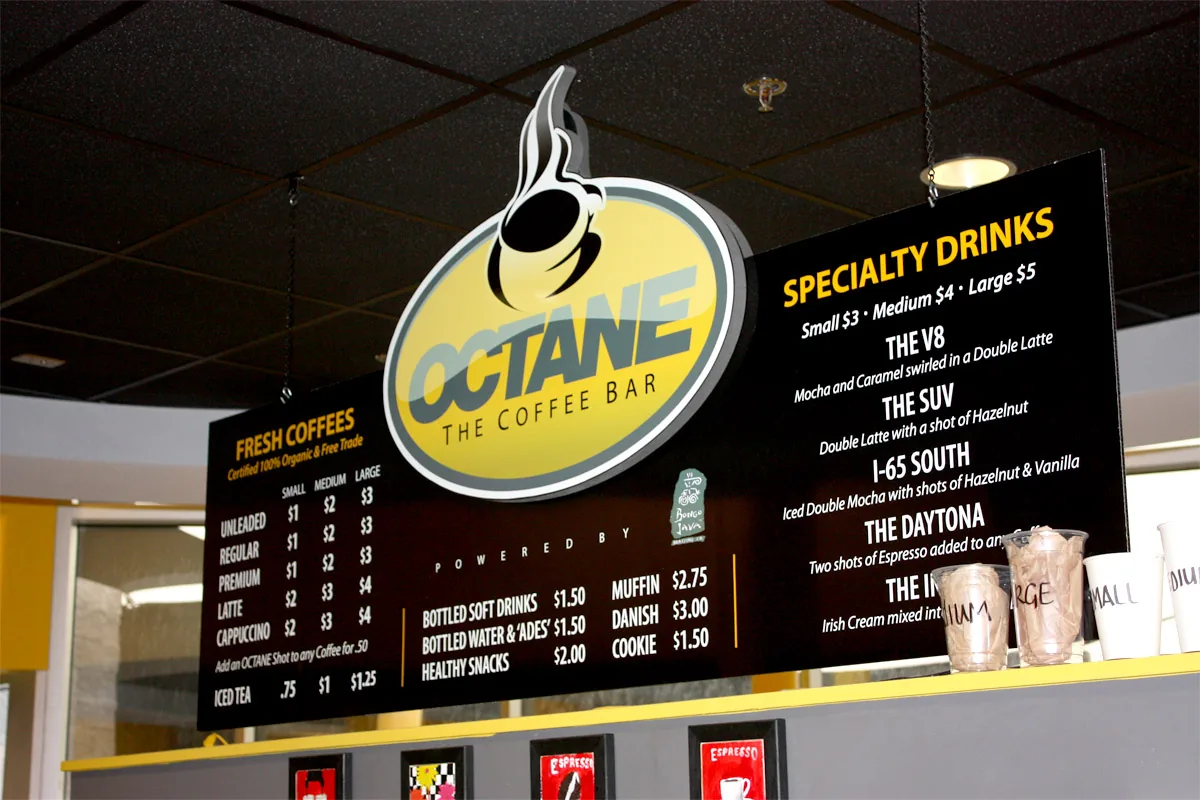
Start with categories people understand. A customer should be able to locate the relevant section without learning internal product codes or reading the entire board. Decide how items belong together and whether the order reflects the way people normally choose. Main products, sizes, additions, and combination options may need different treatment, but they should remain connected visually.
The structure should be agreed before the panel count is fixed. A long list squeezed into a small display becomes difficult to read no matter how attractive the graphics are. We discuss what can be simplified and what belongs on a separate display. Keep naming consistent with printed menus, ordering systems, and staff language. The board is part of the ordering process, so its organization should support the conversation at the counter. A clear category system gives customers a useful starting point and makes later changes easier to incorporate without rebuilding the entire layout.
Make prices and options easy to connect
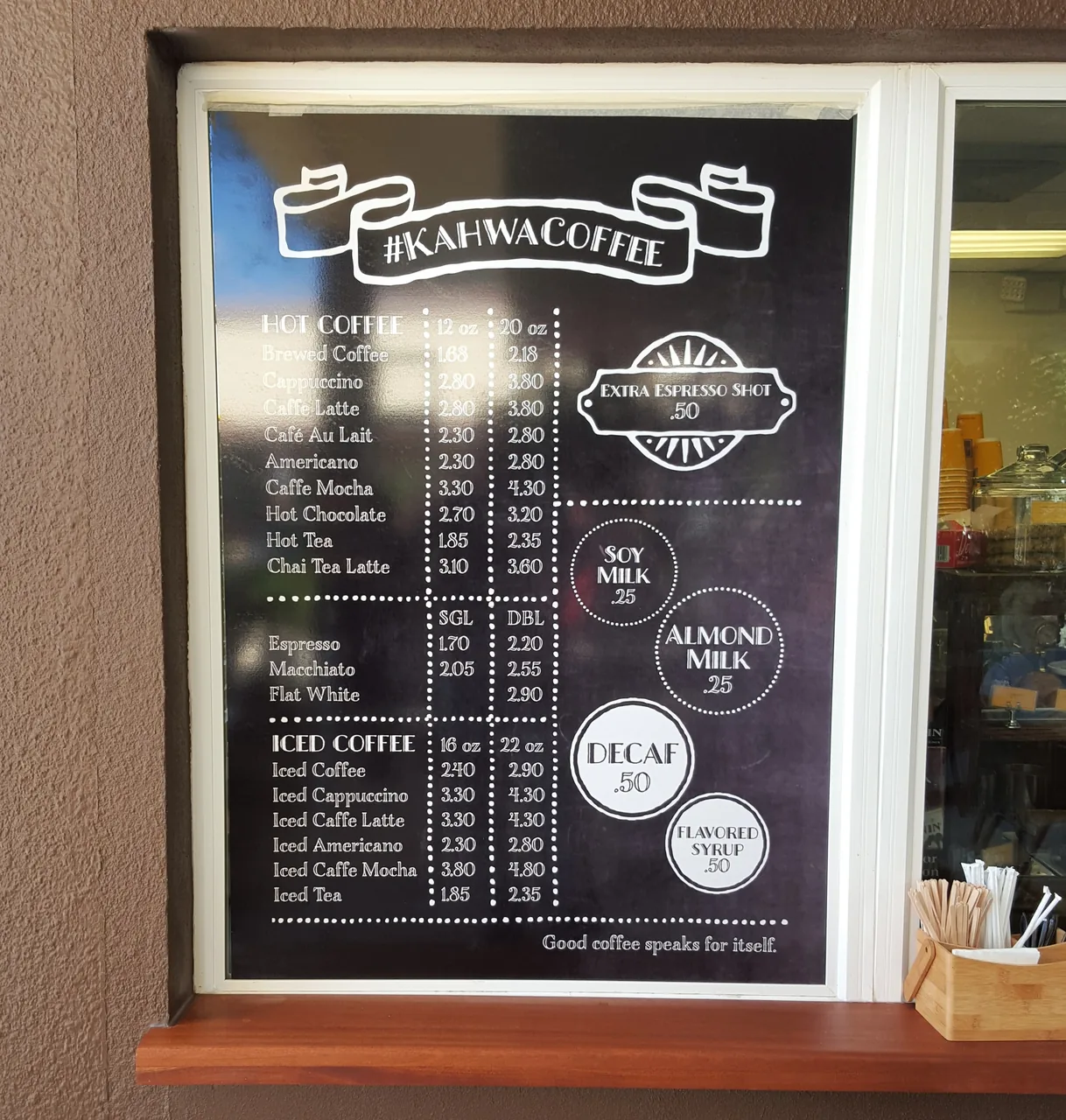
Prices should be clearly associated with the items or options they describe. A column of numbers can be ambiguous if the alignment or spacing does not connect them to the wording. Sizes, additions, and package choices need a pattern that customers can follow. Decide how the business presents these options and apply that pattern consistently across the menu.
Check every item name, price, and condition before artwork approval. A small design change can move a price into the wrong visual group if the content is not reviewed carefully. Do not leave essential details hidden in decorative text that is difficult to read from the ordering position. We work from the approved information supplied by the business and discuss how it should be displayed. The layout should make the choices understandable; it should not invent prices, change terms, or make assumptions about what is included in a meal or service package.
Design for the actual queue and ordering view
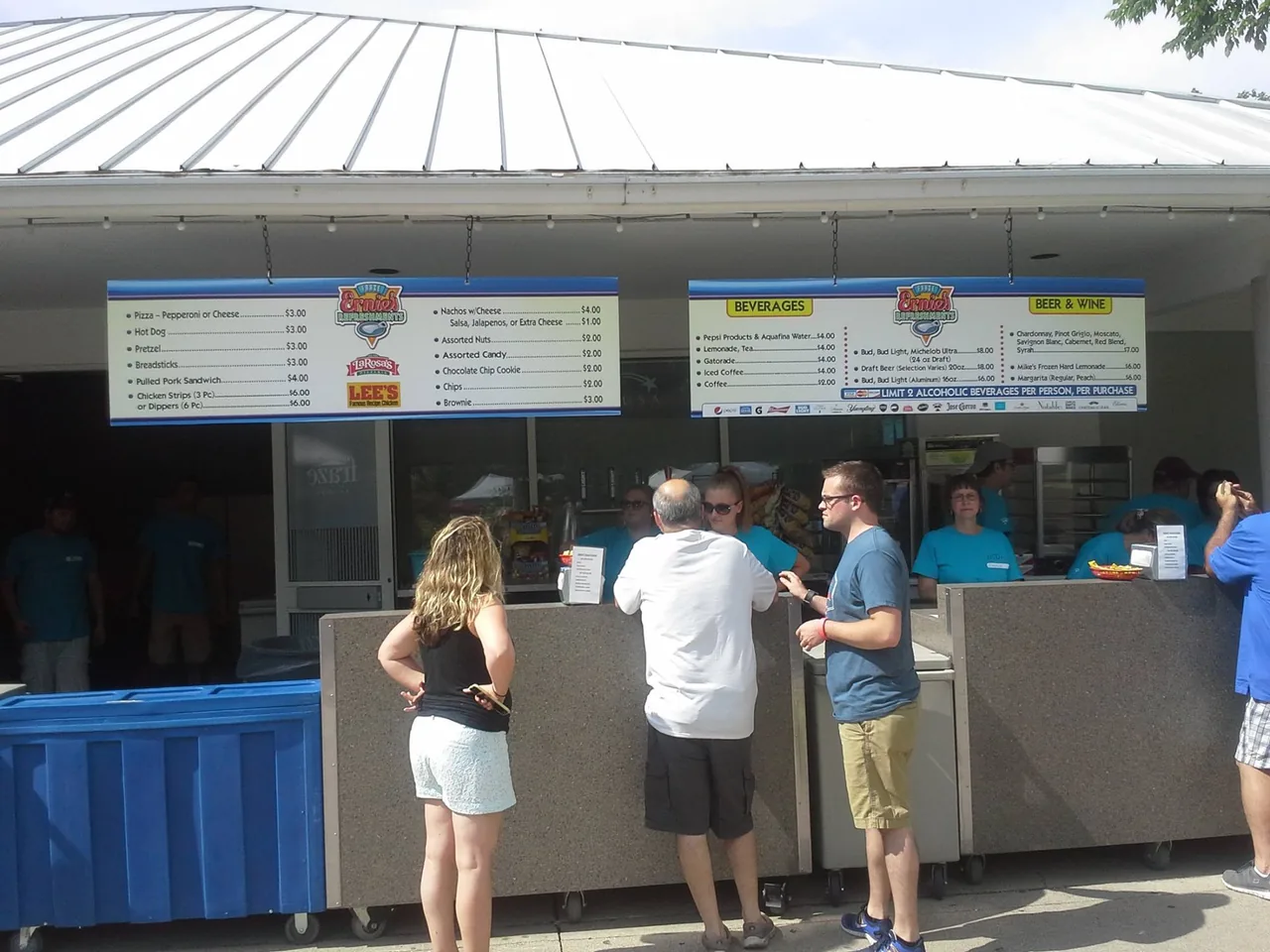
A board may be visible from the counter but unreadable from where customers wait. Review the viewing positions before deciding text size and placement. Someone approaching the queue should have a chance to understand the main categories, while the final ordering position may allow more detailed reading. Furniture, lighting, equipment, and staff movement can affect both views.
Photographs of the counter and customer approach help reveal those conditions. Include wider views rather than only the empty wall where the board will go. A menu positioned above a display cabinet may have different sightlines from one on an open wall. We discuss the layout around the space and the intended audience. The design should remain useful in normal operating conditions, when the counter is staffed and products are on display. A mockup that removes those objects can create a false impression of how clearly the information will be seen.
Use photographs selectively and honestly
Product images can help explain a choice, but they need to be accurate and of sufficient quality for the display size. Use permission-cleared photographs that represent what the business actually provides. An impressive image that does not resemble the served item can create unrealistic expectations. Avoid filling the board with pictures merely because there is space left beside the text.
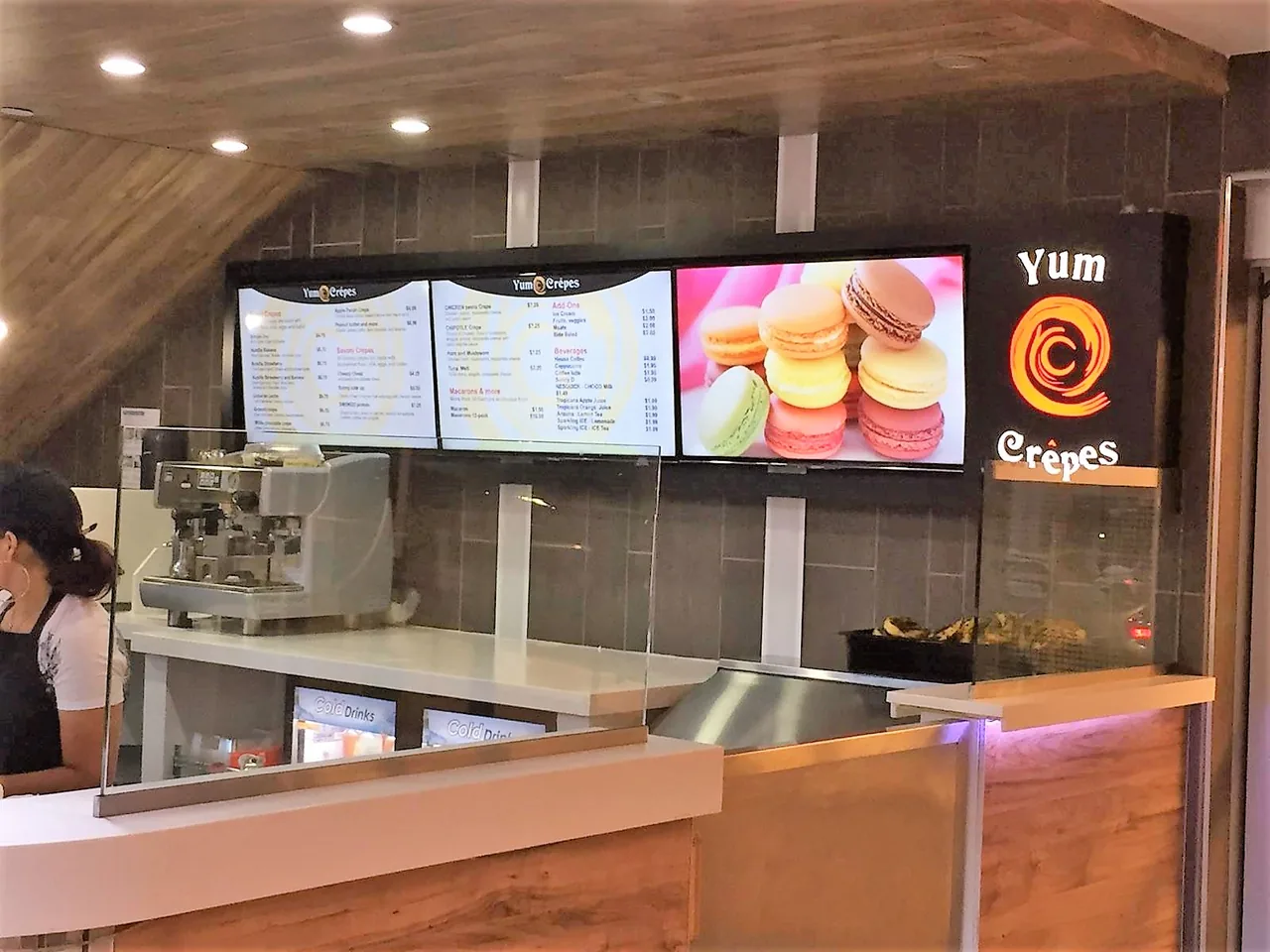
Choose images around the information they add. A photograph can distinguish a product unfamiliar to customers, while familiar items may need only a clear name and price. The crop and position should not obscure the wording or interrupt category structure. We discuss the balance between images, text, and open space. Provide high-resolution source files and identify which pictures are approved for use. Artwork preparation can organize the supplied assets, but it should not turn unverified stock imagery into an apparent photograph of your own menu item without the business making that relationship clear.
Match the display to the brand without losing clarity
A restaurant or café may have a distinctive visual identity, but the menu still needs to be read quickly. Decorative type can work in a heading while a simpler style handles item names and prices. Color accents can organize sections without making every line compete. The background, contrast, and spacing should support the choices rather than overwhelm them.
Look at the board under the actual lighting. Reflections can affect a glossy face, and a dark corner may change how the colors appear. A screen-based proof is useful for layout but does not fully describe a physical display. We discuss finish and material around the setting, with samples where appropriate. The menu can feel recognizably yours without repeating a large logo on every panel. A consistent hierarchy and a limited set of design rules often create a stronger result than several different typefaces or special effects competing for attention above the counter.
Choose a format around the update frequency
A menu that changes occasionally can use a different construction from one with frequent daily variations. Discuss how often prices, items, and promotions will change before selecting the board. Printed panels, replaceable sections, and other formats can have different update processes. The important question is how the business will keep the information current, not simply which style looks most impressive at launch.
If an electronic display is being considered, digital signs are a separate option to discuss. Hardware, content management, access, and support need their own confirmed scope. Do not assume those services are included with a printed menu board request. For a physical display, ask what can be changed without replacing the complete assembly. A planned update area may help with specials, while the main menu stays stable. The chosen construction should fit the real editing routine and the people responsible for maintaining the information.
Give special offers a defined place
Promotions can become confusing when temporary messages are scattered across the main menu. Decide where limited offers belong and how customers will distinguish them from permanent choices. A defined area can keep the display organized and simplify replacement when the offer ends. The message should include the information the business has approved, with its conditions clear enough for the intended viewing position.
Coordinate offers with other customer-facing materials and remove obsolete information promptly. Our promotional signs service can support related displays, while the menu board keeps the ordering structure consistent. Avoid giving a temporary offer so much visual weight that essential categories disappear. A special can stand out within a coherent system. Assign responsibility for updates and keep artwork versions organized, particularly if several locations use related menus. That helps prevent one board from displaying an old price or availability statement after the rest of the business has moved to a new version.
Plan for the environment around the counter
The menu board's location can expose it to cleaning, moisture, heat, or other conditions that vary by premises. Tell us about the surrounding operation before a material is selected. A display near food preparation or equipment needs a different review from one on a dry wall in a waiting area. The sign should be specified for the intended setting rather than chosen from a photograph of another business.
Attachment and service access also matter. Staff may need to replace a panel or reach a changeable section, and the mounting arrangement should account for that use. Property restrictions and any applicable installation requirements should be checked. Cleaning guidance needs to match the supplied materials and graphics. Do not assume the same products used on the counter can be applied to the menu face. We discuss the complete display and its use so the board remains manageable as part of the business routine, rather than becoming a difficult-to-reach object that nobody can update confidently.
Approve content before committing to production
A clear approval process is essential because menu content can change while design is underway. Identify one authorized person to confirm the final names, prices, options, and descriptions. Keep a dated version of the approved menu so artwork is not built from several conflicting lists. If information changes later, review the affected layout and related panels rather than assuming a number can be replaced without other consequences.
The business should also confirm any legally required disclosures or information for its operation; sign design alone does not determine those obligations. We can lay out the approved content, but this service does not supply an independent compliance certification. A quote should identify design, panel construction, mounting, installation, and any update components included. Compare proposals using the same information and scope. That is a stronger basis for selecting a supplier than a headline price for a board whose dimensions, materials, and content have not yet been agreed.
Share the menu and the ordering space
Send your Houston address, the current approved menu, logo files, photographs of the counter and approach, and approximate available dimensions. Explain which information changes frequently and who will handle updates. Include approved images, property restrictions, and the planned opening or refurbishment date. If an old menu board is being replaced, show its mounting and describe what no longer works for customers or staff.
Royal Signs & Awnings can help turn that information into a menu board brief around your business. Request a menu board consultation or call (346) 644-6749 to discuss the layout and display options. The best starting point is accurate content and a clear view of the ordering environment. From there, the categories, prices, imagery, materials, and placement can be developed together, giving customers a more useful way to understand the choices while keeping the display practical for the team responsible for running the business.
Let’s talk about your sign.
Share your location, artwork and project goals with our Houston team.
Request a ConsultationPROJECT QUESTIONS
Frequently asked questions
Can prices be updated without replacing the whole board?
That depends on the construction. Discuss update frequency before selecting fixed panels, replaceable sections, or another format.
Should every menu item have a photograph?
No. Use images where they add useful information, with permission-cleared assets that accurately represent the offering. Preserve space for readable names and prices.
Does a menu board order include digital screens?
Not automatically. Electronic hardware, content management, installation, and support require a separately confirmed scope.
Who approves menu content?
An authorized business representative should confirm the final names, prices, options, and any required information before production.
What should I send for a menu board quote?
Provide the approved menu, logo, available dimensions, counter photographs, update needs, images, and target date. Identify whether the project is a physical display or an electronic system.