Explore this page
Its effectiveness depends on more than its size. The approach, entrance position, message and surrounding conditions all influence whether the sign helps someone make the right decision.
Royal Signs & Awnings helps Houston businesses compare roadside and property-identification formats around those conditions. Monument signs, pylons, pole signs and post-and-panel assemblies offer different presentations. A multi-tenant property introduces additional questions about panel space and future occupant changes.
This page helps you choose the appropriate family. Detailed specifications belong in the relevant product discussion after the sign’s role and proposed location are understood.
Begin With the Driver’s Decision
Identify what a driver needs to do after seeing the sign. Recognizing a brand, selecting the correct driveway and finding a particular tenant are related tasks, but they do not always belong in one message.
A property name may be sufficient where customers already know the business. A shared center may need tenant information. A delivery entrance could require a direction rather than prominent branding. Review that purpose before developing the layout. The useful question is whether the sign gives someone enough relevant information at the right point in the approach, not how many details can be fitted onto its face.
Match the Format to the Property
Freestanding signage includes several structures with different visual and practical roles. A monument presents identity closer to ground level. Pylon and pole formats can offer other arrangements for roadside identification. Post-and-panel signs may suit selected property messages and directional applications.
These categories should not be selected solely by their names. The actual site, approved sign area, desired identity and construction requirements determine suitability. Bring photographs of the road approach and property frontage to the discussion. We can compare the relevant formats, then direct the project toward the appropriate product page and a defined review of its location, appearance and installation conditions.
Review Visibility Before Requesting More Height
An obstructed sign may lead to a request for a taller replacement, but height is only one possible variable. Orientation, landscaping, nearby structures and the relationship to the driveway can all affect the result.
Photographs should capture the approach from more than one direction. A sign visible from one lane may be less useful to customers arriving from the opposite side. Review where recognition should occur and where the visitor makes the entrance decision. The proposed solution should follow those observations and the applicable property constraints. Increasing height without understanding the route can leave the original problem unresolved in a more expensive form.
Make the Primary Identity Easy to Recognize
Roadside sign layouts need a clear hierarchy. The property or business name should be distinguishable from supporting messages rather than competing with every tenant, slogan and contact detail.
Decide which information is essential at the intended distance. Some details belong near the entrance or on the building, where a visitor can spend more time reading. A short descriptor can be useful where the name alone does not explain the destination, but it should have a deliberate role. We help you consider the balance between recognition and information, using the proposed sign proportions rather than an unrestricted graphic that later has to be squeezed into the available space.
Compare Monument Signs for Entrance Identity
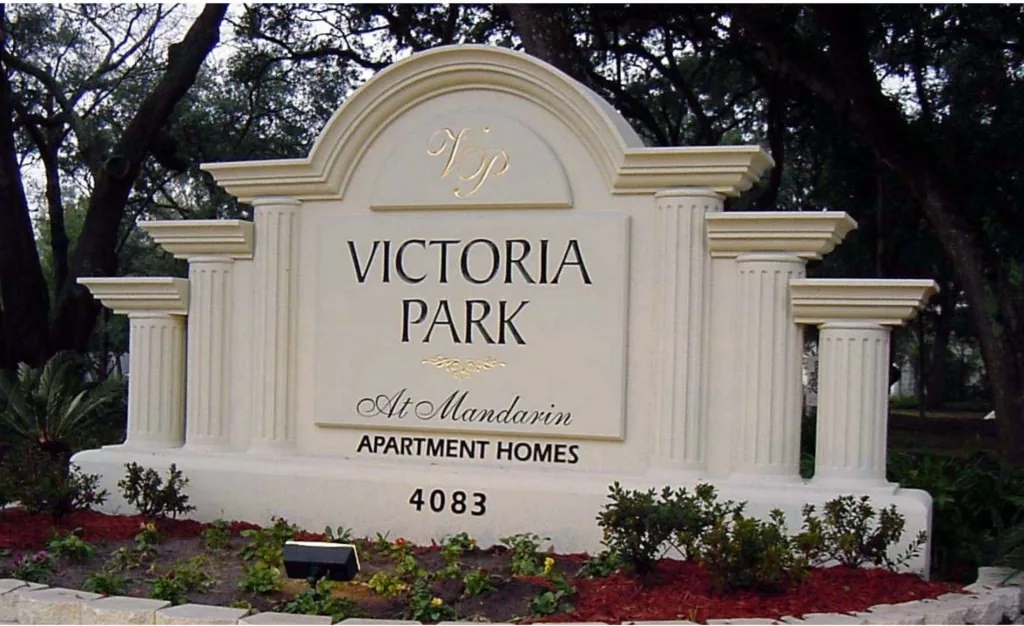
A monument sign can establish a defined identity near a commercial entrance. Its relationship to the landscape and surrounding architecture is part of the presentation, especially where the property wants an integrated appearance.
The layout still needs to communicate clearly. Decorative materials, an elaborate base or additional lettering should not make the main name harder to understand. Consider how the sign will be viewed from the normal approach and what happens as landscaping changes. The dedicated monument-sign page explores this format in more detail. At the category level, the decision is whether a ground-level entrance identity fits the property’s visitor route and intended character.
Consider Pylon and Pole Sign Options
Pylon and pole signs can serve properties requiring a different roadside presentation from a monument. Their design, message arrangement and installation scope need review around the actual location. A pylon may accommodate a coordinated property identity and tenant layout. A pole-sign project may have a different visual objective or existing installation to assess. Do not assume the terminology establishes the construction or approval outcome. Share current drawings or photographs where available. The respective product pages provide more focused information once the format is selected. This comparison stage should establish what the sign needs to communicate and which family deserves further investigation for the site.
Plan Tenant Panels Around Real Leasing Needs
A multi-tenant roadside sign should be planned for the occupants it needs to identify. Panel quantities, proportions and naming conventions influence how consistently the system can be managed.
A center with long tenant names needs to consider those messages before fixing every panel to a narrow proportion. Equally, an oversized property title can leave too little useful space for the businesses visitors are seeking. Review representative tenant artwork and the intended hierarchy. Ask how future panel changes will be specified and approved. A well-planned directory considers both the current leasing situation and a practical process for updates, without attempting to predict every future occupant.
Coordinate Both Faces Where Required
A sign viewed from two approaches may need a layout and orientation review for each face. It should not be assumed that a design effective in one direction will be equally useful in the other.
Check the relationship between the sign and the entrance from each relevant route. The surrounding visual background may differ, and the available viewing opportunity may change. Confirm whether the same message belongs on both sides or whether the property has a reason to vary it. Any variation should remain coordinated. The purpose is a recognizable identity that responds to the approach, with the final configuration stated clearly in the agreed scope.
Decide What Illumination Adds
Illumination should relate to the property’s use and viewing conditions. A business receiving customers in the evening may have different priorities from a site used mainly during daylight hours.
Review how the selected sign format will look both lit and unlit. Materials, graphics and the surrounding environment influence the presentation. Electrical preparation and access for later service should be discussed before installation is planned. Lighting also needs to fit the applicable property and project requirements. A useful proposal explains the intended result and supporting responsibilities rather than treating illumination as an unspecified upgrade automatically added to every roadside sign.
Keep Digital Messages Separate From Fixed Identity
Where a property is considering a digital display, distinguish the permanent identity from the information that will change. Drivers should still be able to recognize the destination as the display content changes.
The project also needs a practical content routine. Identify who will approve messages, who will update them and what information is genuinely useful for the intended audience. A digital component should not be added only because there is spare space in the layout. Discuss its purpose and confirm the available system and support scope. The dedicated digital-sign page provides the next level of detail for that part of the project.
Review Existing Structures Before Assuming Reuse
A replacement face or rebrand may appear simpler than a complete new sign, but the existing assembly needs review. Photographs cannot establish every condition behind its visible surface.
Provide any available drawings, previous project records and details of the proposed change. The sign’s construction, condition and suitability for the new identity should be considered before reuse is accepted. A larger face or different message arrangement may change more than the graphics. The agreed scope should identify what remains, what is replaced and which questions need further verification. Reuse can be discussed as an option without treating the existing sign as automatically suitable.
Coordinate the Sign With Landscaping and Access
A property sign shares space with more than the road. Landscaped areas, pedestrian routes, driveways and service access all need consideration in the location review.
Discuss how the proposed position relates to ongoing property maintenance. A feature that is visible on installation day may later be hidden by growth or become awkward to access for service. The sign location should also be reviewed using the relevant property information and project approvals. Do not choose a position solely because an empty area appears in a photograph. The aim is a useful, maintainable identification point that belongs in the property’s actual layout.
Define Approvals and Preparation Responsibilities
Before fabrication or installation commitments, identify the property criteria and applicable project approvals. The exact address matters because a Houston mailing address alone does not resolve every jurisdiction question.
The proposal should explain the responsibilities for documentation, preparation and installation. Where technical design, electrical work or other related tasks are needed, their scope should be identified. Avoid assuming that an existing sign establishes approval for a new configuration. A clear coordination plan helps the owner understand what is included and what must happen next. It also makes the anticipated schedule more meaningful than a date based only on fabrication time.
Compare the Complete Cost of the Options
Roadside-sign quotations should be compared using the complete assembly and associated work. Dimensions, construction, illumination, tenant arrangement, removal and installation conditions can all influence the scope.
An inexpensive face replacement and a new freestanding sign are different projects, even when both introduce the same business name. Ask which assumptions remain open and whether existing components are being reused. If budget is constrained, discuss the communication priorities first. Simplifying a secondary message may preserve the main identity more effectively than shrinking every part of the sign. A practical comparison keeps the property’s objective visible while explaining what each option actually supplies.
Request a Houston Freestanding-Sign Consultation
Share your address, frontage photographs and the identity the sign needs to present. Include the driveway arrangement, tenant information where relevant and any existing sign records.
Royal Signs & Awnings can discuss the appropriate roadside family and the next steps toward an agreed project scope. Call (346) 644-6749 or request a freestanding-sign consultation. We will help you focus on the relationship between the sign, property and visitor approach, then explore the selected format in detail. The goal is a clear destination identity with a location and layout that support its intended purpose.
Explore Freestanding & Roadside Signs
Tall Signs
Ground Signs
Property Signs
Let’s talk about your sign.
Share your location, artwork and project goals with our Houston team.
Request a Project QuotePROJECT QUESTIONS
Freestanding Signs FAQs
How do we choose between a monument and pylon sign?
Compare the property’s approach, message, visual character and applicable constraints. The appropriate format depends on the actual location, not the category name alone.
Will a taller sign always be easier to see?
No. Orientation, obstructions, approach direction and entrance location also matter. Review the visibility problem before assuming additional height is the answer.
Can a roadside sign identify several tenants?
A coordinated tenant arrangement can be discussed. Provide panel needs and representative artwork so the layout can accommodate the messages sensibly.
Can our existing structure be reused?
Reuse requires a review of construction, condition and suitability for the proposed change. Current photographs and available records are useful starting information.
Can a digital display be part of the sign?
Discuss its purpose and the available system scope. Permanent property identity, changing content and update responsibilities should be planned separately.
What is needed for an initial quotation?
Send the exact address, approach photographs, proposed message, existing-sign information and property criteria. Include whether lighting, tenant panels or removal are required.