Explore this page
Custom promotional signs help Houston businesses announce sales, openings, events, product launches, seasonal offers, and brand activations in the places customers already look. Royal Signs & Awnings can develop coordinated graphics for storefronts, windows, interiors, events, and portable displays. The strongest project starts with the campaign goal, audience, location, duration, and response you want—not with a random list of products. Call (346) 644-6749 or send campaign details, artwork, photographs, quantities, and target dates through the contact form.
Give every campaign one primary objective
A promotional sign should make the next action obvious. The goal may be to enter the store, ask about a service, visit a booth, attend an event, scan a code, or choose a featured product. When one display tries to announce a discount, explain a new service, introduce the company, list every benefit, and provide several calls to action, the campaign loses focus. Define the single result that matters most, then use supporting signs to answer secondary questions. This discipline makes the message easier to read and gives the business a clearer way to evaluate whether the campaign worked.
Match the message to the customer journey
People encounter promotional signs at different stages. An exterior banner or window graphic may create awareness. An entrance sign can confirm the offer. Interior graphics can explain eligibility, product choices, or timing, while a counter display can prompt the final decision. Repeating the same crowded artwork at every position ignores those different jobs. Build a sequence in which each piece advances the message. Consistent colors and campaign language connect the set, but the amount of detail should increase only where the customer has time to stop. A coordinated journey feels intentional and reduces the chance that important conditions are missed.
Design for a short viewing opportunity
Most promotional displays compete with architecture, merchandise, traffic, phones, and other advertising. The headline should be understood quickly, with the offer or event name in a dominant position. Dates, locations, restrictions, and response details belong in a readable secondary level. Strong contrast, clean type, deliberate spacing, and one focal image usually outperform a layout filled with small text. Review proofs at the intended size and distance. If the campaign depends on a QR code, place it where people can safely stop and use it; it is not a practical primary action for drivers passing a storefront.
Select formats according to duration
A weekend event, a three-month seasonal campaign, and a permanent brand program require different materials and finishing. Short-term graphics may prioritize efficient installation and planned removal. Reusable frames, banner stands, table covers, and modular panels can support recurring events when messaging areas are designed to change. Longer exterior campaigns need materials, edges, mounting, and inks suited to exposure. Duration should be discussed before artwork is adapted because it influences substrate, adhesive, hardware, storage, removal, and replacement. The lowest initial cost may not be the best value when a display must travel or return several times.
Use storefront and window space strategically
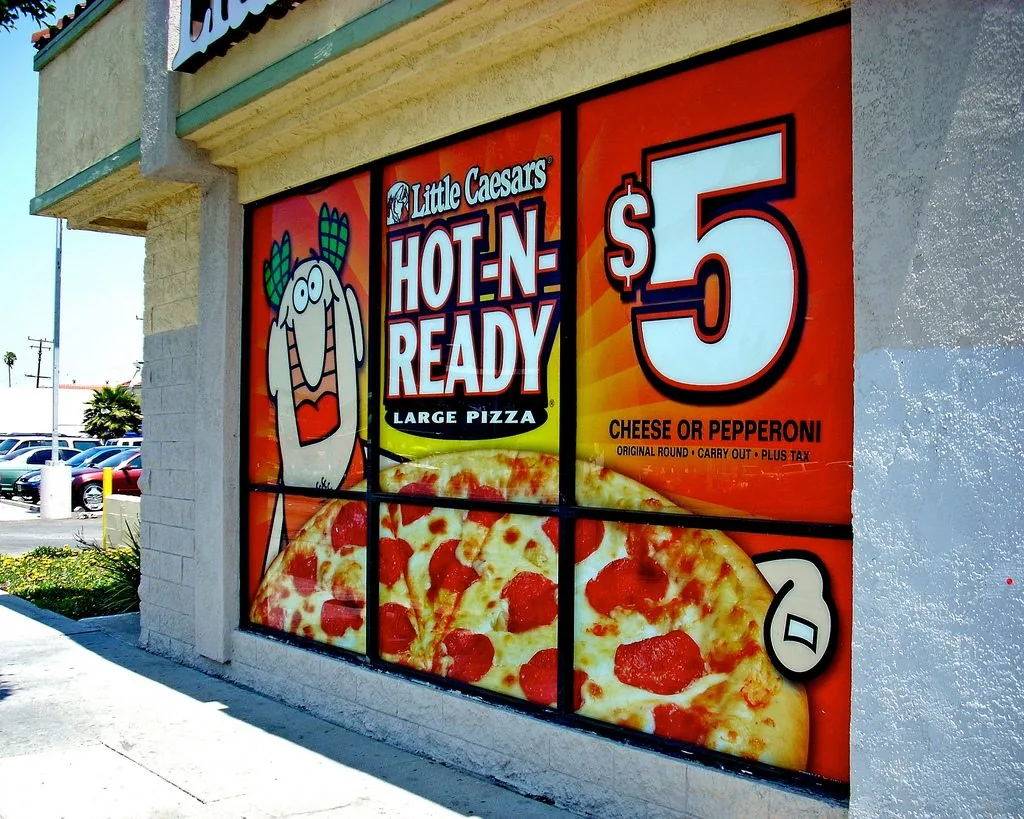
Windows can carry a launch, sale, or seasonal theme while allowing the storefront identity to remain visible. Begin by reserving space for the business name, entrance, hours, and necessary visibility from inside. Then define one campaign zone rather than covering every pane with unrelated messages. Full-color graphics can create impact, cut lettering can deliver clean offer details, and partial coverage can preserve daylight. The design should consider mullions, door handles, interior displays, reflections, landlord criteria, and how the graphics appear from both sides. A window campaign should support the store experience, not make the entrance difficult to recognize.
Build portable displays for repeated use
Trade shows, community events, recruiting days, pop-ups, and sponsorships often require signs that travel. Portability involves more than low weight. Components should fit the available vehicle, move through doors, assemble within the time and staffing available, remain stable in the intended setting, and pack without damaging printed surfaces. Labeling cases and retaining an inventory can prevent missing parts. Separate long-term brand elements from event-specific dates or offers so the core display can be reused. A modular approach can reduce waste and make the presentation more consistent across events of different sizes.
Keep the campaign aligned with the brand
Promotional work can be more energetic than permanent signage without becoming unrecognizable. Approved logo use, core colors, typography, photography style, and tone should anchor the campaign. A discount badge, seasonal palette, or event theme can add urgency, but it should not overpower the business identity. Multi-location organizations benefit from a small campaign guide that shows approved sizes, margins, message order, and placement examples. This makes local implementation faster and prevents each location from rebuilding artwork independently. Brand consistency also helps customers connect the temporary offer with the company they already know.
Plan legal details and offer conditions early
Promotional wording may need dates, eligibility, exclusions, inventory limits, pricing conditions, or other qualifications supplied by the business. Those details should be finalized before production, not added as unreadably small text at the end. Decide which conditions belong on the sign and which can be provided at the point of sale or on a landing page. Confirm spelling, prices, codes, dates, locations, and contact details against one approved campaign brief. Royal Signs & Awnings can organize the layout, but the business should approve the accuracy and completeness of the offer before files move into production.
Coordinate quantities, locations, and installation
Campaigns become difficult when the artwork is approved but no one knows how many pieces are needed or where each piece belongs. Create a location schedule with sizes, orientation, material, message version, and installation method. Site photographs can show windows, walls, counters, fences, and existing hardware. For multi-location rollouts, label packages by store and retain a master list. Identify whether the customer or the sign team will install each item, and confirm access, surface condition, property rules, and removal responsibilities. Good logistics protect the launch date as much as strong creative work does.
Measure response and preserve what can be reused
Before launch, decide how the business will recognize a useful result. Possible signals include redeemed codes, event registrations, inquiries, featured-product sales, landing-page visits, or traffic during the campaign period. The sign itself does not prove causation, but consistent tracking can show which message, placement, or format deserves another test. Photograph the installed campaign, record quantities and dimensions, retain final files, and note what was damaged or difficult to use. These records turn a one-time order into practical knowledge for the next promotion rather than forcing the team to start again.
Plan removal before the campaign expires
Expired dates and faded offers weaken trust. Assign a removal date and responsible person when the signs are ordered. The method should suit the surface and product; window films, wall graphics, banners, rigid panels, and portable displays have different removal and storage needs. Inspect the underlying area after removal and address residue or visible color differences before the next campaign is installed. Reusable pieces should be cleaned, dried, labeled, and stored in a way that protects edges and printed faces. A campaign is not complete until temporary messages are removed or deliberately replaced.
Request a quote for Houston promotional signs
Share the promotion goal, audience, offer, required dates, locations, quantities, approximate sizes, brand files, photographs, and installation expectations. Royal Signs & Awnings can help compare windows, banners, rigid signs, vinyl graphics, portable displays, event pieces, and coordinated interior elements based on how the campaign will be used. Call (346) 644-6749 or use the contact form to discuss promotional signage for a Houston sale, launch, opening, event, seasonal program, or multi-location rollout.
Create a launch checklist
Before release, verify the approved offer, dates, prices, codes, locations, quantities, installation positions, removal date, and responsible contacts. Confirm that every location received the correct version and that permanent business identification remains visible. Photograph the campaign after installation and test any QR code or landing-page path from the customer's position. Give staff a short explanation of the message and redemption process so the physical signs and customer conversation agree. This final operational check protects the investment and prevents a strong visual campaign from being undermined by incorrect details or inconsistent execution.
Adapt the campaign without fragmenting it
A promotion may need to appear on a roadside banner, storefront window, entrance poster, hanging display, counter card, table cover, and digital screen. Copying the same layout onto every size usually produces weak results: a horizontal headline may become cramped on a narrow banner, while small offer details disappear on a large window viewed from outside. Create a simple campaign system instead. Define the non-negotiable elements—the brand, headline, offer, dates, and action—then establish versions for long-distance, entrance, browsing, and point-of-decision viewing. Use the same visual cue and language across those versions so customers recognize that they belong together. Keep an approved artwork list with dimensions and revision numbers, and identify which pieces contain location-specific or date-specific information. If several stores participate, allow only the necessary fields to change. This approach protects consistency without forcing every surface to carry identical content. It also helps production because the sign team can check quantities and locations against a controlled set of files. After the campaign, compare which versions were visible, readable, and practical for staff to maintain. Preserve the successful framework for future launches, but update the creative and message so repeat customers do not learn to ignore a display that never changes. Keep the final installation photographs with the campaign record for future planning.
Related services
Explore: Large Banners | Window Graphics | Vinyl Signs | Canopy Tents | Trade Show Displays | Retail Signs
Let’s talk about your sign.
Share your location, artwork and project goals with our Houston team.
Request a ConsultationPROJECT QUESTIONS
Frequently asked questions
What types of promotional signs can be produced?
Options may include banners, window graphics, rigid panels, portable displays, table covers, event signage, floor graphics, and other campaign-specific pieces.
How early should we order signs for an event or sale?
Begin after the message, locations, quantities, and dates are known. Design approval, materials, production, shipping, access, and installation can all affect the schedule.
Can promotional signs be reused?
Yes, when the format, construction, message zones, handling, and storage are planned for repeated use.
Can you create one campaign for several locations?
A coordinated rollout can use common artwork with location-specific sizes, messages, quantities, packing, and installation instructions.
What information is needed for a quote?
Provide the campaign goal, exact offer, dates, quantities, sizes, locations, brand files, site photographs, required delivery date, and installation scope.