Building & Storefront Signs
Letter Signs · Building Identification · Architectural Cover

DESIGNED TO MAKE AN IMPRESSION.

Choosing commercial signage is easier when you begin with the problem the sign needs to solve. Perhaps customers cannot identify your entrance, a roadside identity no longer represents the property, or a new office needs a consistent system from reception to individual rooms. Those situations require different solutions, even when they share the same company name.
Letter Signs · Building Identification · Architectural Cover
Tall Signs · Ground Signs · Property Signs
Illuminated Signs · Electronic Displays
Interior Branding · Navigation & Compliance
Printed Graphics · Event Displays · Mobile Graphics
Planning · Production & Installation · Existing Signs
Royal Signs & Awnings helps Houston businesses discuss signage around their properties, brands and operating needs. This services overview introduces the main sign families so you can narrow the options before reviewing a particular product. You do not need to arrive with a complete specification. A clear explanation of the location and the desired change is a useful beginning.
Whether the project involves one substantial exterior sign or a coordinated commercial package, the objective is to give each element a defined role.
Start by separating recognition, arrival and navigation. Recognition signs introduce a business or property. Arrival signs confirm the entrance or destination. Navigation signs help people move through the site after they get there. A project may need all three, but each message belongs in a different place.
For example, a medical office set back from the road could need a property entrance identity, building lettering and interior room identification. Ordering one oversized sign would not address every part of that journey. We help you consider the relevant families together, then explore individual products where their construction and appearance become important.
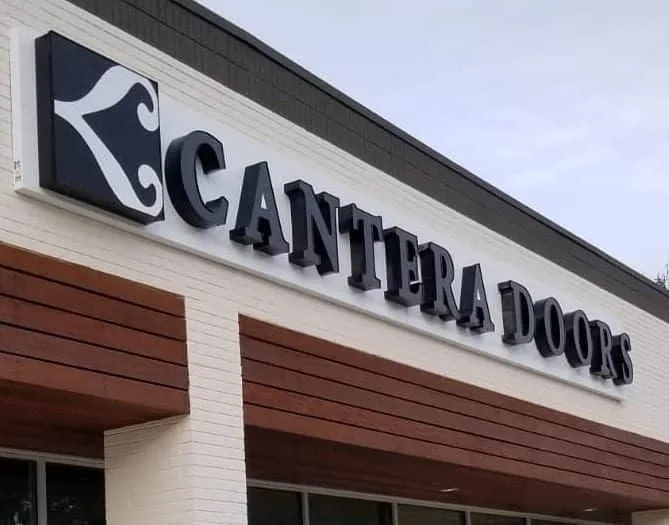
Building signs make a business recognizable on its own frontage. Channel letters, dimensional lettering and cabinet signs offer different ways to present a name or logo. Their suitability depends on the available facade, artwork, viewing angle and property requirements.
A storefront in a shared retail center may have a defined sign band and landlord criteria. A standalone commercial building may involve several elevations and a separate visitor entrance. These conditions should guide the selection rather than a photograph of another company’s sign. Review our building and storefront options when the main challenge is identifying the premises, particularly where the current frontage gives customers little confirmation that they have arrived.
Freestanding signs identify a property independently of the building facade. Monument, pylon, pole, tenant and post-and-panel formats can serve different locations and message needs. The choice should respond to the approach and the relationship between the road, entrance and destination.
A low entrance identity may suit one property, while another needs a different format because the building sits farther back. Height alone does not determine effectiveness. Message hierarchy, orientation and the available sign area also matter. Our freestanding-sign section helps you compare these families before moving into a product-specific discussion about construction, illumination, replacement or tenant-panel arrangements.
Letter signs are useful when the business wants its identity to read as individual forms rather than a complete graphic panel. Channel letters can provide an illuminated presentation; dimensional letters offer another approach to depth, material and finish. Metal lettering may also be part of the discussion.
The artwork should be reviewed for the intended scale. Thin strokes, small descriptors and tightly spaced characters can require attention before fabrication. A logo that works in an email signature should not automatically be enlarged without adjustment. Explore the lettering pages for the relevant format, then share your brand files so the proposed interpretation can be reviewed against the actual installation location.
Lighting and changing content solve different needs. An illuminated business name helps present a fixed identity under the agreed viewing conditions. A digital display introduces an additional decision: what information will change, who will update it and how that content will be managed.
Keeping those purposes distinct makes the selection clearer. A business does not necessarily need a screen simply because it wants nighttime visibility. Equally, a permanent name alone cannot deliver regularly changing messages. Discuss operating hours, intended audience and update responsibilities before choosing a system. The lighted, LED and digital-sign pages provide more focused information once the communication task is understood.
Interior branding can confirm that visitors have entered the correct business and give the reception area a deliberate identity. Lobby signs, dimensional logos, acrylic signs and selected wall signs may contribute to that result.
The right presentation should relate to the interior rather than compete with every surface. Reception furniture, lighting, wall finishes and the visitor’s entry angle all affect the decision. An executive office may need a restrained logo, while a customer-facing venue may want a stronger focal point. Share photographs or interior drawings so the sign can be considered as part of the space, with its scale and message developed around the actual setting.
Navigation deserves its own planning rather than being treated as a final collection of labels. Room identification confirms a destination, while wayfinding helps people reach it. Directories and informational signs can support other decisions along the route. Agree on room names and numbering before ordering. A corridor direction is less helpful when it uses wording different from the destination sign. Applicable accessibility requirements should also be considered for the relevant content and placement. Our indoor-sign pages separate these functions so you can identify the scope needed for an office, medical facility or commercial property without assuming every interior plaque uses the same specification.
An awning can influence how people recognize and approach a business. When signage is part of that feature, its wording and placement should relate to the facade, entrance and proposed awning construction.
The project needs a clear boundary between branded signage and any broader structural work. A request to update the identity on an existing awning is different from a request involving a new assembly. Provide current photographs and explain which elements you want to retain. We can discuss the signage requirement and confirm the scope available for your project. The dedicated awning page is the next step for detailed information about the proposed commercial application.
Some projects are easier to plan by property type. An apartment community, shopping center, hotel or industrial facility may need several sign formats serving one coordinated operation. The industry pages address that wider context.
Product pages answer how a sign format works; an industry package considers which formats belong together. For example, a shopping-center project may combine roadside tenant identification with storefront criteria and internal directions. Those elements should share a visual relationship while carrying different messages. If your project involves several locations within one property, describe the complete visitor route so the recommendations consider the package rather than just the first sign requested.
A business changing its identity should assess what is already installed before deciding what to replace. Some elements may remain useful, while others need new graphics, different proportions or removal. Reuse should follow a condition and suitability review.
Create an inventory that includes exterior names, tenant panels, entrance information and interior branding. Small forgotten items can keep the former identity visible after the main sign changes. The update should also account for the property owner’s requirements and any associated preparation. Discuss the intended changeover so the sign project can be coordinated with the business transition rather than leaving several conflicting versions of the brand around the premises.
A sign that needs attention does not automatically need complete replacement. The appropriate next step depends on the symptom, construction, condition and available service options. Photographs help explain the issue, although they may not reveal its cause.
Describe what has changed: a section is dark, a face is damaged, lettering is missing or the presentation has deteriorated. Include the location and any available installation information. Repair and maintenance should be scoped around that evidence rather than a guess. The dedicated repair page provides the route for existing-sign enquiries, while replacement can be considered separately if the review identifies a broader reason to change the installation.
A practical sign package distinguishes essential identity from supporting additions. If the budget is limited, decide which part of the customer journey is causing the greatest problem. Improving the primary identification may be more useful than adding several unrelated small signs.
Compare alternatives using the actual scope. Dimensions, construction, illumination, installation access and existing-sign removal can change the quotation. Two projects with similar names may therefore involve different costs. Explain your priorities and a working budget range where available. That gives the discussion a useful boundary and allows the team to consider adjustments that preserve the main purpose instead of reducing every element indiscriminately.
Start with the address, business name, current photographs and a short explanation of what you want to improve. Add brand artwork, property criteria and relevant drawings if you already have them. Clear information helps identify the right next step.
For multiple signs, note their intended locations and messages. For a replacement, show the existing assembly and surrounding area. Include the target timing and the person who can approve the project. You do not need to solve every technical question before contacting us. The aim is to give the discussion enough context to distinguish a product enquiry from a larger commercial signage package.
Once the appropriate family is identified, the project can move into site information, design development and a defined quotation. Approved artwork, preparation responsibilities and installation conditions should be understood before production commitments are made.
A coordinated decision is more valuable than choosing a sign purely because it looks familiar. Consider how the proposed solution identifies the business, relates to the property and can be maintained later. Royal Signs & Awnings can discuss those priorities and help you focus on the relevant options. The individual service pages provide the detail; this overview gives you a starting point for selecting the next conversation.
Tell us whether you need stronger exterior identification, a roadside presence, a coordinated interior or an update to existing signage. Send the project address and photographs so we can review the situation in context.
Call (346) 644-6749 or request a commercial signage consultation. We will discuss the relevant sign families, the information still needed and the next step toward an agreed scope. A useful recommendation begins with your business and property, then connects the sign choices to the job each one needs to perform.
PROJECT QUESTIONS
Start with the main customer problem: recognizing the business, finding its entrance or navigating inside. The relevant sign family can then be reviewed around the property.
Discuss the full scope with us. Provide locations and messages so exterior identity, arrival information and interior signs can be considered together.
No. Lighting should reflect the intended audience, operating conditions, appearance and applicable property requirements.
Yes, existing signage can be reviewed as part of the project. Reuse, refacing or replacement depends on suitability, condition and the agreed scope.
The address, current photographs, brand files and a short description of your objective are useful. Include property criteria and relevant drawings where available.
No. The estimate also depends on dimensions, construction, installation conditions and related work. A defined scope supports a meaningful quotation.