Explore this page
The canopy may need a new identity, the roadside sign may carry an outdated fuel brand, and the convenience store may present a third version of the business. Replacing one component without reviewing the others can leave drivers uncertain about what the station now offers.
Royal Signs & Awnings provides custom commercial sign design, fabrication and installation in Houston. For gas station signage projects, we start by identifying the signs involved, the approved brand direction and the site’s operational requirements. A clear inventory helps separate a simple sign replacement from a coordinated station rebranding program.
Gas station signs in Houston can involve canopy identity, building signage, pylon or pole signs and other commercial components. The suitable scope depends on the property, the operator and the brand requirements. If your project also includes electronic fuel-price displays, provide the proposed system information so the supply, integration and service responsibilities can be reviewed before they are included in the quote.
Inventory the Site Before Approving the Rebrand
A station has several places where its identity appears. Some are obvious from the road; others become visible only when a customer enters the site. The rebranding inventory should identify all components intended to change, including those retained from an earlier operator.
Photograph the canopy from each approach, the main roadside sign, the store frontage and the signs attached to related buildings. Record approximate dimensions and note whether the components are illuminated. Include existing drawings and brand instructions if they are available.
The inventory should also distinguish replacement from removal. An old sign may need to disappear entirely, while another may retain its structure with new identity components. Those are different scopes and should be described that way.
For gas station rebranding signs in Houston, a single site review can help the project team organize the physical changes around the approved new identity. It also gives the owner a better understanding of which information remains unknown. Defining those items early is more useful than approving a visual concept that assumes every existing component can be reused.
Canopy Identity That Works From the Approach
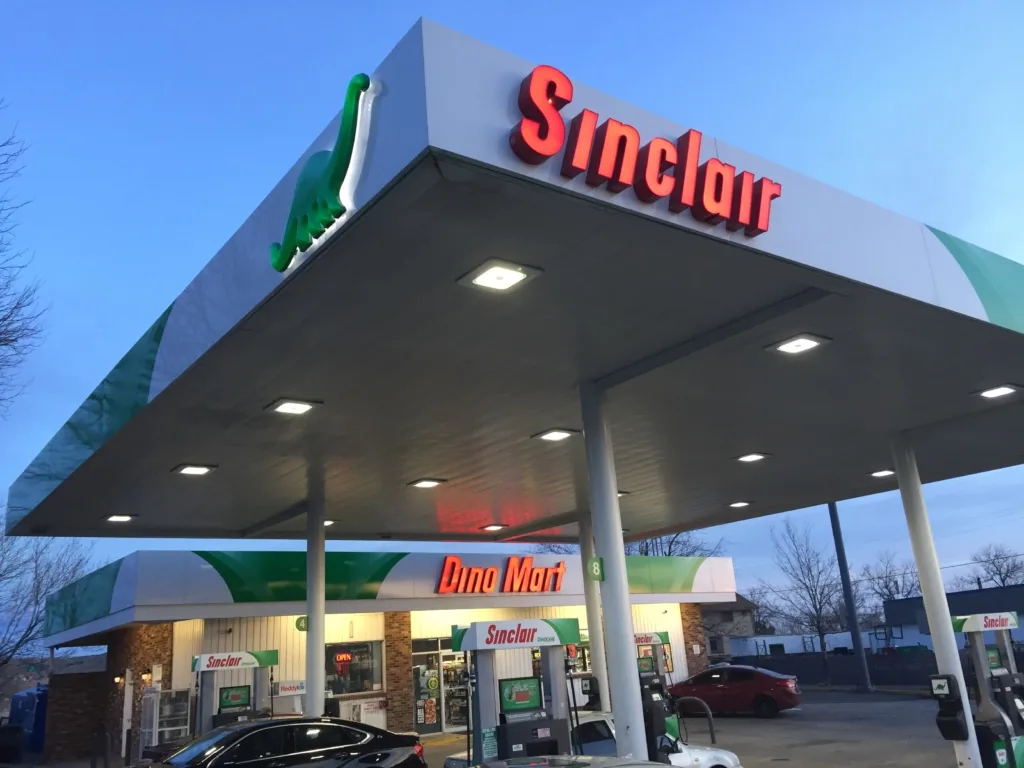
The canopy is a prominent part of many station sites. Its sign treatment needs to fit the approved brand and remain readable from the relevant approaches. The shape, length and available fascia area influence how the identity can be presented. A logo placed on an isolated drawing may appear clear but behave differently beside lighting, structural supports or other site features. Review the intended locations using photographs and measured information. Determine which sides of the canopy need to carry the identity and how the layout relates to entering vehicles.
Gas station canopy signs in Houston should be discussed as defined sign components. A canopy branding request does not automatically mean canopy structural work, roofing, fuel equipment or every other part of the station is included. The quote needs a clear description of the actual signage work.
Where old identity components are being removed, consider the surface left behind. The new arrangement may expose older finishes or mounting marks. Any preparation or restoration needs to be identified and coordinated with the relevant project participants before installation is scheduled.
Roadside Pylon and Pole Signs for Station Identification
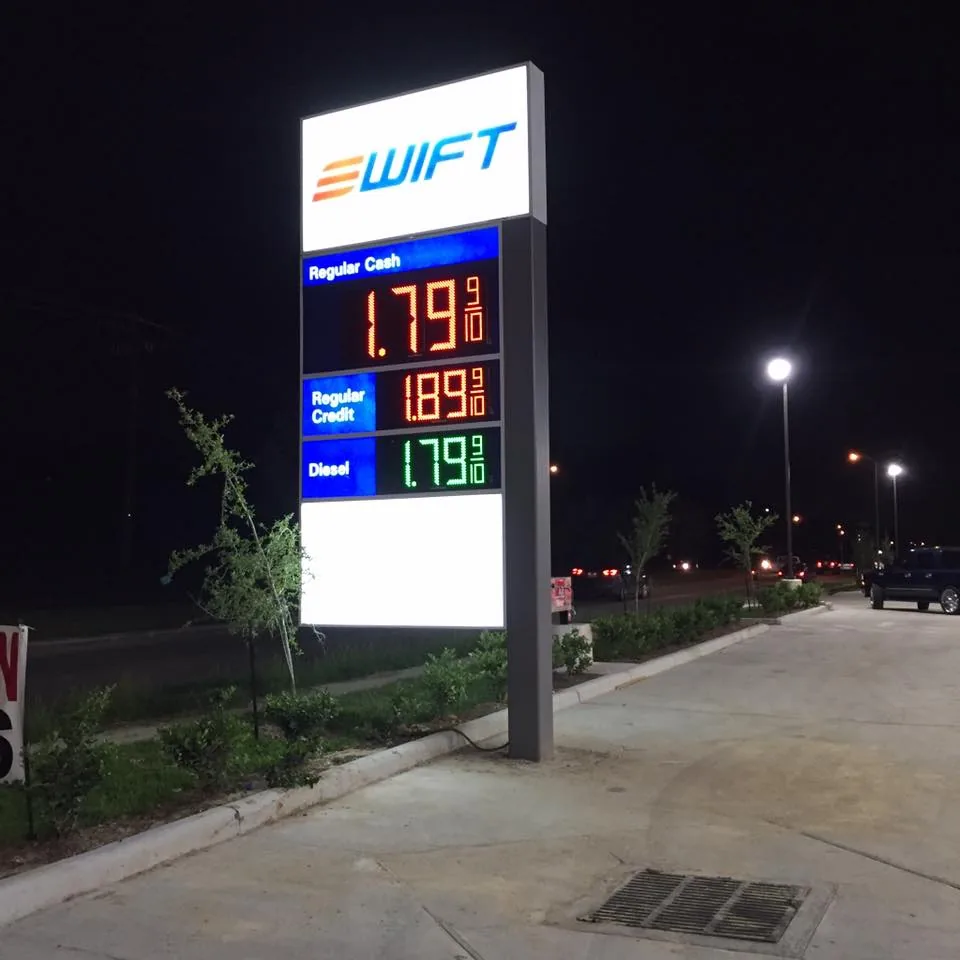
The roadside sign gives an approaching customer a chance to recognize the station before reaching the driveway. Its useful information should be organized around that task. The main identity, supporting details and any price-display elements need enough space to perform their individual roles.
For gas station pylon signs in Houston, assess the current layout and the desired finished sign. A brand change may alter the proportions of the logo or the arrangement of the information. Fitting a new identity into an old opening without reviewing the composition can compromise readability.
The sign structure, mounting components and existing condition also need attention. A roadside sign replacement can involve more than changing its visible face. Available records and site information help the team evaluate what is being retained and what needs further assessment.
Keep the project’s pylon or pole sign scope separate from a single panel update. State whether the work involves new cabinets, lettering, illumination, retained structure or other components. The clearer that distinction, the easier it is for the owner to compare proposals and understand the installation requirements.
Fuel Price Display Requirements Need Their Own Specification
Electronic fuel-price displays are functional systems, not simply another printed sign face. If they form part of your station project, the specification needs to identify the required display arrangement and the responsibilities for supply, installation, connection and future support.
Start with the operator’s actual needs. Which fuel categories must be displayed? How will updates be controlled? Does the site need one display arrangement or several matching faces? Provide the approved system and brand requirements rather than assuming a generic electronic display will suit the station.
Where an existing system is involved, gather the available manufacturer and model information. Compatibility, connections and servicing need to be reviewed by the responsible parties. A new sign design should not assume that every retained display or control component can be transferred without further assessment.
Discuss these items before the quote is finalized. Royal Signs & Awnings can review the signage scope with you, while any electronic display work needs clearly assigned responsibilities. This keeps the project brief accurate and helps prevent a visual rebrand from concealing an undefined equipment requirement.
Connect the Storefront Identity With the Roadside Signs
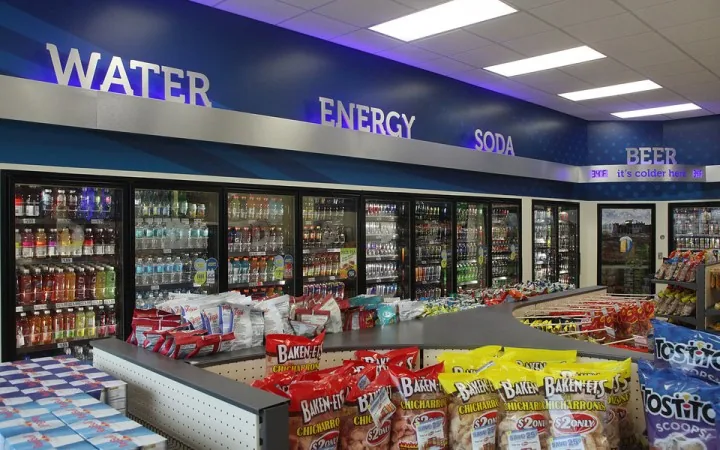
A station’s store frontage is where the arrival experience becomes a customer visit. The store name, entrance identity and other commercial sign components should make sense alongside the canopy and roadside sign, even when different brands operate within the property.
Decide which name belongs to which part of the site. The fuel brand, station operator and convenience store may not be the same entity. Approved artwork and placement instructions help the team reproduce those identities correctly without blurring their roles.
Storefront lettering or an illuminated commercial sign can provide a defined identity above the entrance. The appropriate construction depends on the wall, design, electrical provisions and relevant requirements. Review the site rather than choosing a product solely from a reference photograph.
For a station with a restaurant or another tenant, identify whether its sign is included in the same project. Multiple business identities can be coordinated without forcing them into one identical treatment. The aim is a property where each destination is understandable and the overall arrangement is controlled.
Reuse Decisions Should Follow the Condition Assessment
An existing station may contain valuable sign components, but reuse is a project decision rather than an assumption. Old cabinets, frames, lettering or mounting arrangements need to be suitable for the proposed design and installation.
Inspecting the visible faces is only part of the assessment. A component can appear acceptable from the road while still requiring closer review before it is retained. The proposed changes may also introduce different dimensions, construction or electrical requirements.
For gas station sign replacement in Houston, ask the quote to explain which parts are reused and which are newly supplied. Identify any assessment needed before that decision can be finalized. The property owner should know whether the proposal is a face replacement, a refurbishment or a more substantial new sign project.
If removal exposes surfaces that need attention, define that work separately. It may need coordination with a contractor or property maintenance team. A complete rebranding plan considers the condition left behind as well as the appearance of the signs being installed.
Plan Installation Around a Working Station
A gas station remains a busy vehicle environment while signage work is planned. Customers, deliveries, staff and service vehicles use the property for different purposes. The installation work area needs to be coordinated with the station operator.
Discuss equipment access, material staging and the locations that may require temporary restrictions. Any work close to entrances, canopy areas or other operational zones needs a site-specific plan. The project team should understand the conditions and responsibilities before agreeing on the practical sequence.
If the station will continue trading during the rebrand, identify how the signs will change over time. Mixed branding may be unavoidable during a transition, but the order should be deliberate. The operator and brand representative should agree on the timing of removal and replacement where those decisions affect the business identity.
Relevant property and jurisdictional approvals also need review. The requirements depend on the actual site and the sign work proposed. Share the station address, brand criteria and existing records early so the project can be assessed before production and installation commitments are made.
Budget for a Coordinated Package Rather Than Isolated Pieces
A station rebranding quote should identify the physical components and their locations. Canopy identity, roadside signage, store lettering and electronic displays can involve different construction and responsibilities. An overall price is more useful when the underlying scope is visible.
Record the quantities, dimensions, materials, lighting and installation work included. State the removal and reuse assumptions clearly. Any display equipment, electrical work, surface preparation or approvals that remain to be confirmed should be identified before the project is treated as complete.
If the rebrand covers more than one station, provide a site list and note the differences between locations. A common logo does not mean every property has the same sign dimensions, mounting surfaces or access conditions. Each site needs enough information to support its own scope.
Brand consistency can still guide a multi-site package. Approved artwork, color references and component specifications create a repeatable direction, while the fabrication and installation details are adapted to the individual stations. This balances a recognizable identity with practical project planning.
Request a Gas Station Signage Consultation
Tell Royal Signs & Awnings which Houston station you are updating and whether the project involves one sign or a complete rebrand. Send photographs, approved brand files, a list of components and any existing drawings. Identify the operator or representative responsible for approval. If your request includes fuel-price display work, provide the system requirements and available equipment details. We can discuss the commercial signage design, fabrication and installation scope and identify what needs further review. Contact our team to begin organizing the project around the station’s identity, physical condition and operating schedule.
Let’s talk about your sign.
Share your location, artwork and project goals with our Houston team.
Request a Project QuotePROJECT QUESTIONS
Gas Station Signage FAQs
Can a gas station rebrand include both canopy and roadside signs?
Yes, those components can be scoped together as part of a coordinated signage project. Identify the signs and locations that need to change, then supply the approved brand requirements. Each component's construction, removal and installation work should be listed clearly.
Does canopy signage include replacing the canopy structure?
Not automatically. Canopy identity signs and the canopy structure are separate scopes. Specify whether your request concerns logos, lettering or other sign components. Structural, roofing and other building work must be identified and coordinated separately where required.
Can the existing gas station sign structure be reused?
Potentially, subject to its condition and suitability for the proposed sign. New dimensions, construction or mounting requirements may affect that decision. Reuse should follow an assessment and be recorded clearly in the agreed scope.
What should we provide for electronic fuel-price display work?
Supply the required fuel categories, display arrangement, approved system requirements and any existing manufacturer or model information. Confirm who is responsible for supply, integration and support. That work needs a specific review before it is included in the project quote.
Can the station remain open during installation?
The operating arrangements depend on the work and site conditions. Discuss access, staging and any temporary restrictions with the operator before scheduling. A project-specific installation plan is needed rather than a blanket promise of uninterrupted operation.
Can you quote signage for several stations?
We can discuss a multi-site signage scope. Provide the address list, site photographs, brand files and component requirements for each location. A shared identity can guide the design, while differences in dimensions, retained structures and access are assessed individually.