Explore this page
The project might include a company name, logo, opening hours, appointment instructions, or a coordinated combination. It should be organized around how the door is used, rather than treated as a small version of every other business sign. We consider glass areas, handles, movement, nearby information, and the visitor's view. The finished sign can be restrained while still doing a substantial job. Clear details at the entrance help the customer proceed confidently and give the business a more organized appearance without requiring a large amount of text on the door.
Confirm the right entrance and the right identity
Some businesses have more than one door, and not every door serves customers. A staff entrance, delivery entrance, and public entrance need different information. Mark the intended locations clearly in the brief. A company name placed on an unused door can reinforce the wrong route even if the sign itself is attractive and easy to read.
Check that the public-facing business name agrees with customer communications and the signs on the property. Suite numbers should match the building directory and appointment instructions. If several companies share an entrance, decide whether the door identifies the shared reception or individual occupants. We discuss that hierarchy before choosing the layout. The customer should not need to reconcile competing versions of the name or guess whether two adjacent doors serve the same place. A clear identity at the correct entrance is more useful than repeating the logo on every door without considering its function.
Put practical information in a readable order
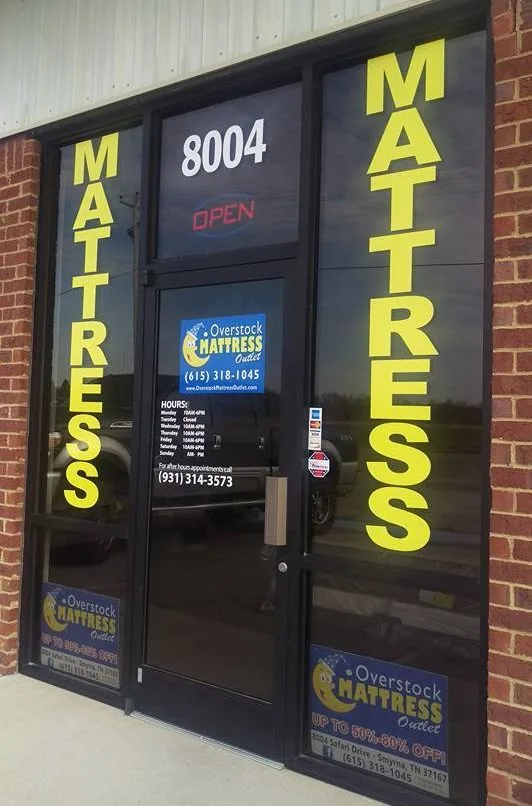
Opening hours, booking instructions, and a contact method can all belong near an entrance, but they should not compete with the business identity at equal size. Decide what the visitor needs most often. A retail customer may check today's hours; an appointment holder may need an arrival instruction; a delivery driver may need the correct receiving location. Organize the sign around those recurring questions.
Keep the wording direct and check it carefully. Avoid internal shorthand that means little to a new visitor. If several instructions are necessary, group them so a person can read without searching across unrelated lines. Our informational signs service can support additional details elsewhere when the door would become overloaded. The useful balance is enough information for the next action, with the name and essential entrance details still clear. A long list that forces all text into small lettering may be less helpful than a shorter, better organized message.
Opening hours need an owner and an update process
Hours on a door can remain visible long after the business routine changes. Agree who will check the information and authorize updates. Confirm whether the displayed schedule means customer opening hours, appointment availability, or another service arrangement. Those are not always the same. The wording should accurately describe what a visitor can expect at that entrance.
Consider how temporary closures or holiday variations will be communicated without covering the permanent sign with a growing stack of notices. A defined update area or separate notice format may suit the business, depending on the chosen construction. Keep the website and other customer-facing schedules aligned when the hours change. We can discuss how the door layout supports those updates, but the underlying operational information must come from the business. A neatly produced sign still creates confusion if it invites people to visit at a time when the entrance is not actually available.
Fit the sign around the door hardware and movement
Handles, push plates, locks, frames, and hinges influence the useful space. A graphic should not hide necessary hardware or become difficult to read when the door is open. Check the view with the door in its normal positions, especially at busy entrances. A design approved against a closed-door photograph may behave differently during ordinary customer use.
The proposed installation also needs review around vision areas and applicable property or code requirements. Do not assume the whole glass face is available for graphics. Share any restrictions before the layout is settled. We consider placement with the actual dimensions and hardware positions, rather than using an approximate rectangle that ignores those details. That helps the finished information sit comfortably on the door and keeps practical instructions visible where people naturally look. The design should support the entrance's operation as well as contribute to the visual identity of the business.
Glass lettering and mounted plaques create different effects
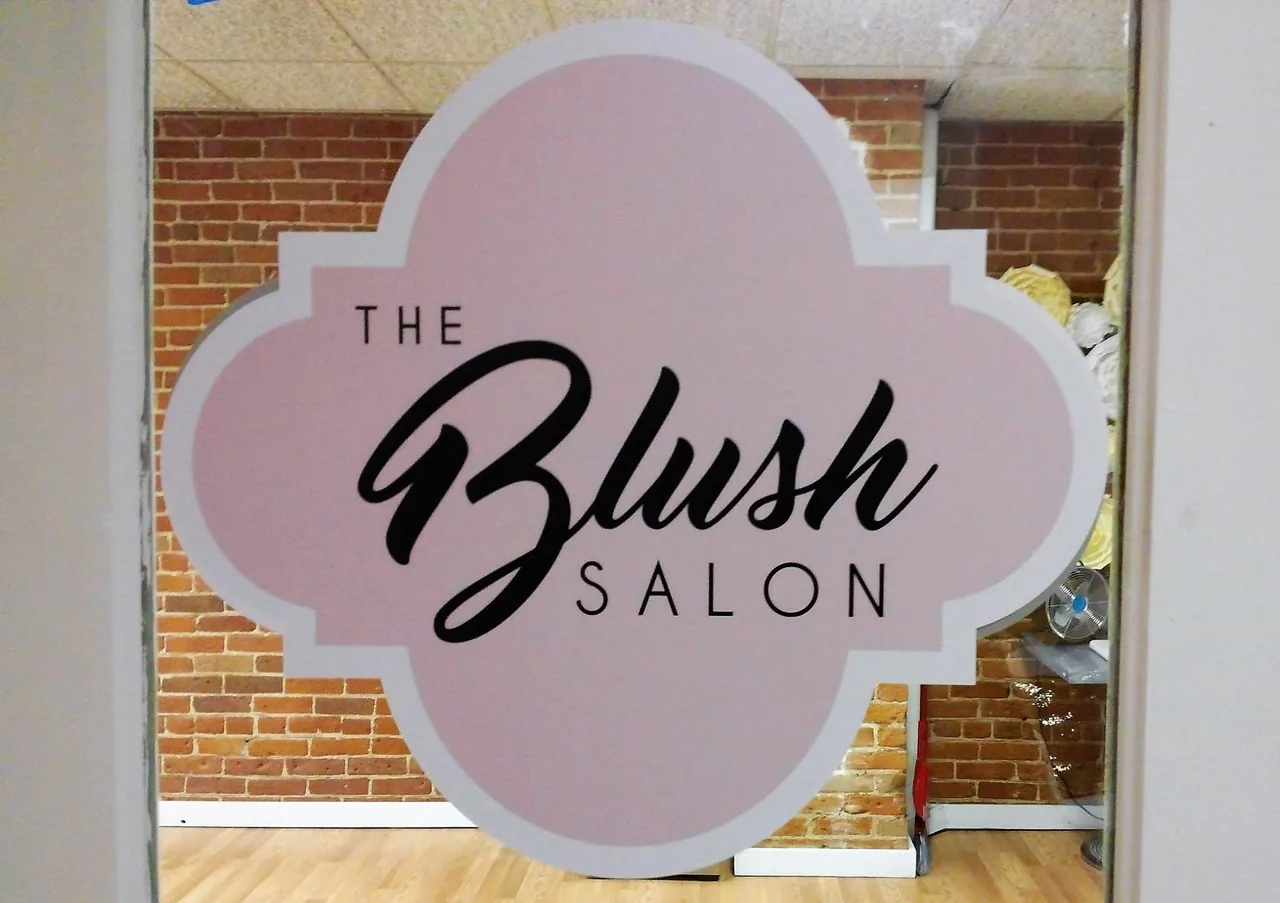
Cut lettering on glass can give essential information a clean appearance with open areas around it. A printed treatment can add a defined background or broader design. A plaque on an appropriate surface creates a different construction and may be useful where glass lettering is not the best fit. The choice depends on the material of the door, the message, and the installation requirements.
Discuss the viewing side, desired opacity, and expected changes before selecting a product. An original vector logo helps assess fine details and scale. For a wider glass treatment around the entrance, window graphics can coordinate the adjacent panes while the door remains focused on identity and use. The door format should not be chosen solely from an attractive example on a different surface. We review compatibility, placement, and the complete attachment method so the proposed visual effect has a realistic basis in your actual premises.
Test contrast against the changing background
Glass door information is seen against reflections, interior light, and activity on the other side. A color that reads clearly in one photograph can disappear in another condition. Consider the approach during the day and when the interior is lit in the evening. Fine pale lettering against a bright background may need a different treatment to remain useful.
We discuss the color and opacity in relation to the glass and setting. A backing area can create contrast, but it also changes the open view and visual character. Letter size should reflect how close people stand to read the details. Avoid making essential hours or instructions secondary simply to preserve an oversized decorative logo. Review a proof with the intended layout and, where appropriate, a sample. The finished composition should allow the customer to recognize the business and then find the practical information, rather than treating legibility as something to solve after installation.
Separate branding from required identification
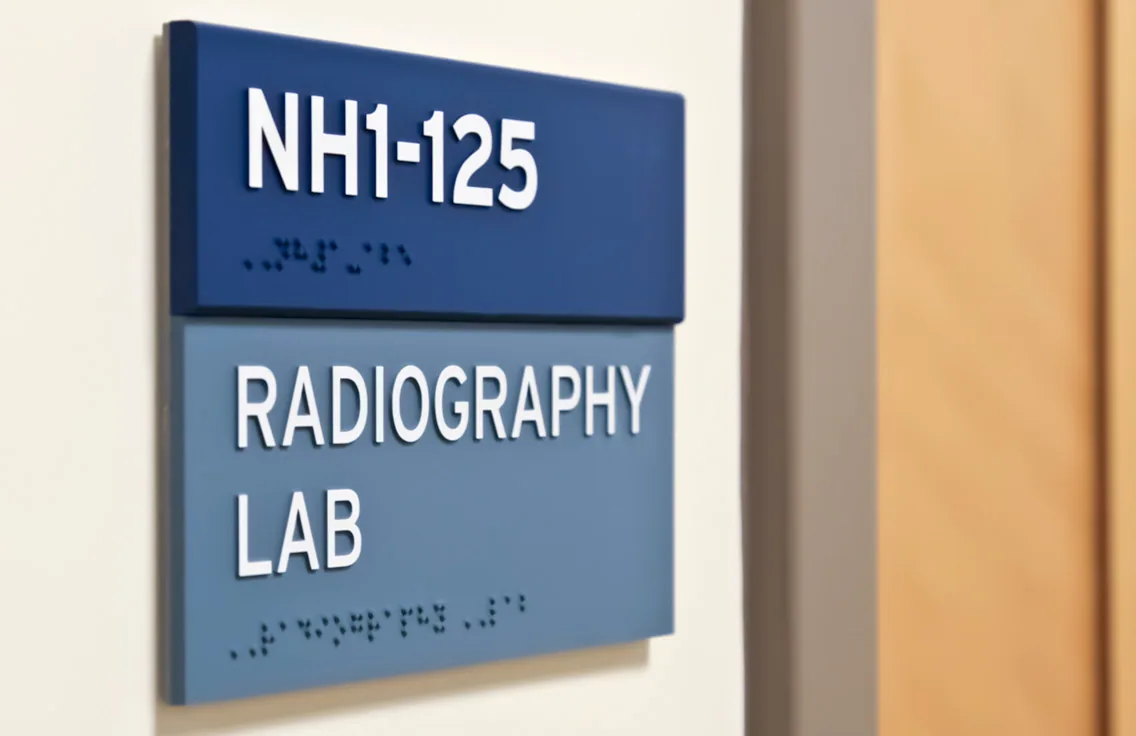
A company logo on a door does not automatically fulfill the requirements for signs identifying permanent rooms or spaces. Decorative business identity, room names, directions, and other information can have different accessibility obligations. The applicable specification depends on the content and function, as well as the building context. Those details need review before production where requirements apply.
Some information may belong beside the door rather than on the moving leaf. Do not assume a convenient position in the artwork is the correct installation location for a required sign. We can discuss the branding brief while identifying the need for a separate project-specific review of required identification. Keeping the functions clear prevents a visually coordinated package from making unsupported compliance claims. The entrance can carry a consistent business identity while the appropriate identification and access information are specified for their actual purpose, rather than relying on one logo graphic to do every job.
Prepare for installation and removal of old information
Existing graphics may need removal before the new information can be installed. Adhesive residue, damaged films, surface coatings, and the condition of the door should be reviewed. Tell us what is already present and whether previous attempts at removal have affected the surface. A new sign should not be specified around an assumption that the door is clean and ready when photographs show only the old face.
Coordinate access around opening hours and security arrangements. The door may need to remain available at certain times, or the business may require a planned work window. Ask what preparation and removal are included in the scope. Materials and installation conditions should follow the product guidance for the actual surface. Where an entrance is being refurbished, confirm the door and glazing work are complete. This makes the project easier to coordinate than treating signage as a last-minute task squeezed between unfinished hardware changes and customer arrivals.
Plan small updates without creating a patchwork
A telephone number, hours change, or new company name may require different replacement work depending on the construction. Discuss likely updates at the beginning. Some elements can be produced separately, while a fixed printed panel may require a larger replacement. A flexible-looking layout is not proof that every part can be changed without disturbing the rest. Keep the approved wording, measurements, artwork, and material references. Those records help later work match the original style instead of introducing another font or slightly different color. Cleaning instructions should also be retained and shared with staff. A quote can identify design, products, removal, preparation, and installation, with exclusions clear. Compare proposals against the same agreed layout and surface. Door signage is often a compact project, but the value comes from accurate information and a suitable application, not simply from the quantity of lettering supplied or the number of decorative options offered.
Send the door details and the information visitors need
Provide the Houston address, photographs of the entrance with the door open and closed, and the exact wording you want displayed. Include the logo, available dimensions, hardware positions, existing graphics, and property restrictions. Explain whether the door serves customers, staff, deliveries, or several occupants. For opening hours or appointment information, supply the confirmed schedule and instructions rather than asking the design to infer them.
Royal Signs & Awnings can help develop door signage around the way your entrance is used. Request a door sign consultation or call (346) 644-6749 to discuss the options. The project may need only a focused set of details or a coordinated update across several entrances. In either case, accuracy and placement deserve the same attention as the visual finish. A clear door sign helps the visitor complete the journey into your business with the right identity, current information, and a practical next step.
Let’s talk about your sign.
Share your location, artwork and project goals with our Houston team.
Request a ConsultationPROJECT QUESTIONS
Frequently asked questions
What information belongs on a business entrance door?
The company identity, accurate hours, and essential arrival instructions may be useful. Choose the details around the entrance use and avoid overcrowding the layout.
Can opening hours be changed later?
Usually an update can be arranged, but the work depends on the construction. Discuss likely changes before selecting the format and retain the approved artwork.
Is a door logo an accessibility sign?
Not automatically. Branding and required room or space identification have different functions. Review applicable requirements and installation locations for the project.
Can adjacent window graphics match the door?
Yes. The frontage can share a visual identity while the door keeps its essential information clear. Specify the glass areas and viewing sides together.
What should I send for a door sign quote?
Share photographs, exact wording, logo, dimensions, door material, existing graphics, and property criteria. Explain how visitors use the entrance and any required work periods.