Explore this page
The project may involve replacing a tenant panel, updating a directory, or developing a coordinated identification system across the site. We discuss the information that belongs on shared signs, the signs controlled by individual occupants, and the way people move from the property entrance to the correct destination. For a property manager, a useful system also has to remain manageable when tenants change. The first installation should therefore be planned with future updates in mind, not treated as a permanent snapshot of today's occupancy.
Define the responsibilities before commissioning artwork
Tenant signage becomes easier to manage when ownership and approval responsibilities are clear. Who controls the shared roadside sign? Who authorizes a new panel? Can an individual tenant order its own replacement, or must the property manager coordinate the work? Those questions should be answered before artwork is produced. Otherwise, two parties may commission different versions of the same name or disagree about the approved sign format.
We recommend gathering the property's written sign criteria, the tenant's approved identity, and a current occupancy list at the beginning. The list should identify the exact business name, suite number, and any additional information authorized for shared signage. Decide who gives final approval of spelling and layout. Where the project involves an existing sign, also establish who can approve its removal or alteration. A clear chain of responsibility helps keep a straightforward panel update from becoming an avoidable disagreement between the occupant, management, and installation team.
Create a hierarchy that is fair and readable
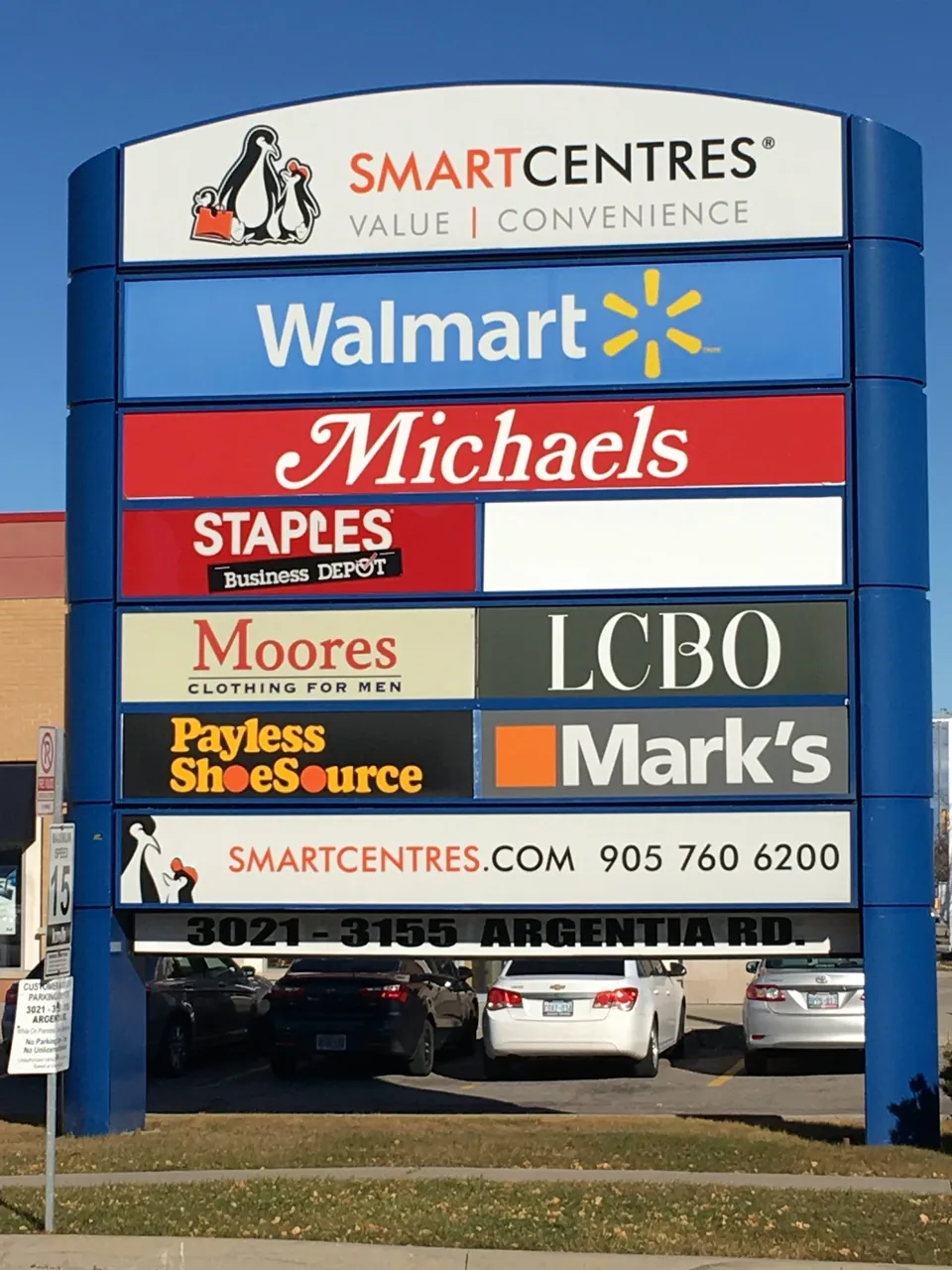
A shared sign needs a deliberate hierarchy. The property name, tenant names, address, and directional information should not compete at equal size simply because they are all important to someone. Think about the audience at each location. A roadside viewer may need to recognize a destination quickly. A visitor standing in a lobby can read more detailed information. That difference should influence what appears on each sign and how it is organized.
Consistency does not require every tenant logo to have identical proportions. A long wordmark and a compact symbol may need different arrangements to fit comparable panel spaces. The property can establish boundaries for size and placement while allowing brands to remain recognizable. We discuss how the tenant information will be displayed without promising equal visibility from every position. The useful objective is a coherent system that gives each approved occupant a clear place, rather than a patchwork where the most recent replacement overwhelms the older panels.
Tenant panels and freestanding structures are different scopes
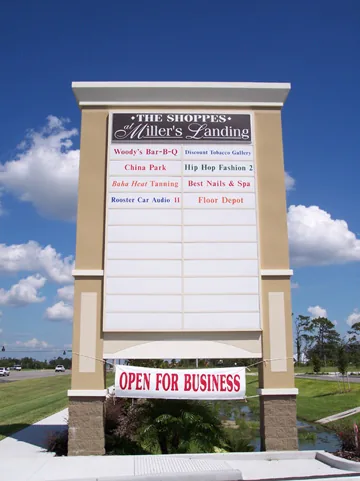
A request for a new tenant panel is not necessarily a request for a new roadside structure. If your property already has a pylon or monument sign, the immediate need may be a face replacement within an existing opening. That is a more limited scope, but the opening, retaining system, and condition still need review. Do not assume the old panel dimensions are correct without checking the actual installation.
For a new shared sign, the structure, placement, and applicable approval requirements introduce additional decisions. We discuss whether the project concerns the whole assembly or only selected tenant information. Our pylon signs and monument signs services can support a broader freestanding installation where appropriate. Separating these scopes helps property managers compare proposals meaningfully. It also avoids treating a panel change as authorization to modify the structure, lighting, or site position when those elements were never part of the brief or approved work.
Directories should reflect how visitors search
A tenant directory can be arranged alphabetically, by suite, by floor, or by another useful category. Choose the system according to what visitors know when they arrive. At an office property, people often have a company name and an appointment, so a directory that connects that name to the suite can be valuable. At a center with several entrances, a site map or directional grouping may make more sense than a long undifferentiated list.
Accuracy is as important as appearance. Confirm whether a tenant is listed under a trading name, legal name, or familiar public name. The wording should agree with appointment messages and the signs closer to the unit. Avoid listing internal department names unless visitors actually use them. For properties with frequent occupancy changes, discuss an updateable directory format. A carefully organized directory loses its value if management cannot keep it current or if the information leads visitors toward a suite the tenant no longer occupies.
Plan the route from the shared sign to the unit
The roadside tenant listing may confirm that a business is on the property, but it does not always identify the correct unit. Follow the route from the entrance and notice where a visitor must make a choice. Are suite numbers visible from parking? Does an office building have several lobbies? Are deliveries directed to a different entrance? The shared sign should be part of a connected information system, not the only reference point. Directional elements can bridge the gap, while unit-level identification confirms arrival. Use consistent naming and numbering throughout the property. If a center uses building letters as well as suite numbers, those identifiers should appear in customer instructions and on the appropriate signs. We can discuss the signage around these decision points with management. The aim is to reduce conflicting cues, not add signs wherever there is spare wall space. A smaller number of well-positioned messages can be more useful than a larger set that repeats incomplete information.
Design for the next tenant, not only the current one
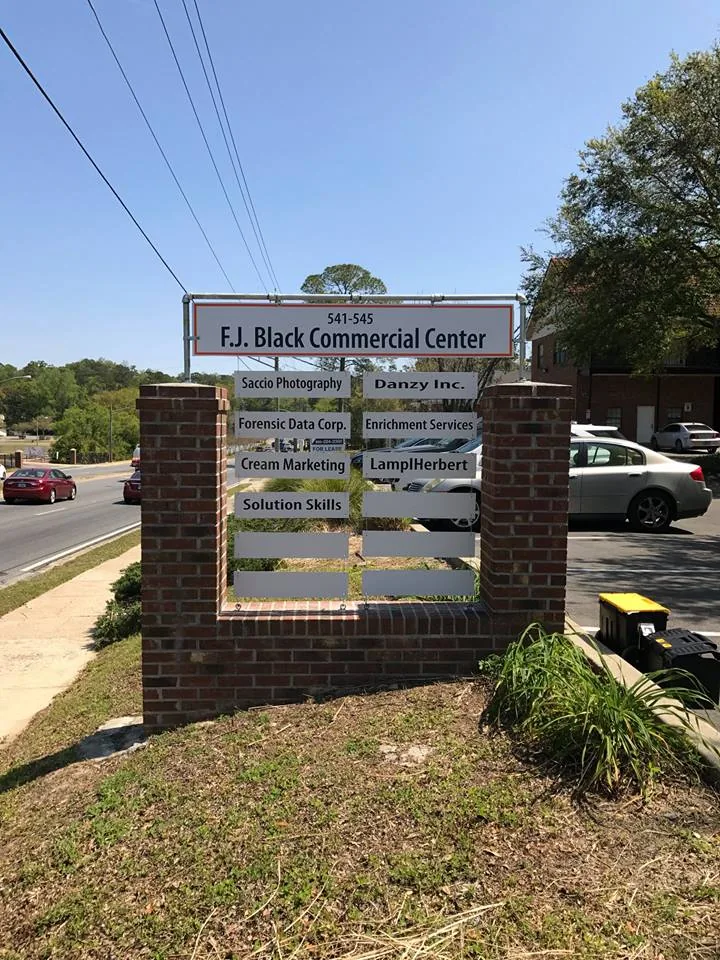
Occupancy changes are normal, so the sign system should have a defined update process. A replaceable panel, interchangeable insert, or repeatable artwork template can simplify future changes, depending on the construction. Discuss how the sign will be accessed, how a replacement is specified, and what parts can remain in place. A system that looks unified on installation day should not become difficult to maintain after the first tenant leaves.
Keep the approved layout dimensions, material specification, color references, and panel positions in the property records. Record the exact location of each tenant entry, particularly on a sign with several similar openings. When new branding arrives, compare it with the established rules rather than adapting the panel size around each new logo. A documented process makes changes more predictable and helps the property keep its appearance without requiring every future manager to work out the original design decisions from scratch.
Review existing illuminated panels before replacing faces
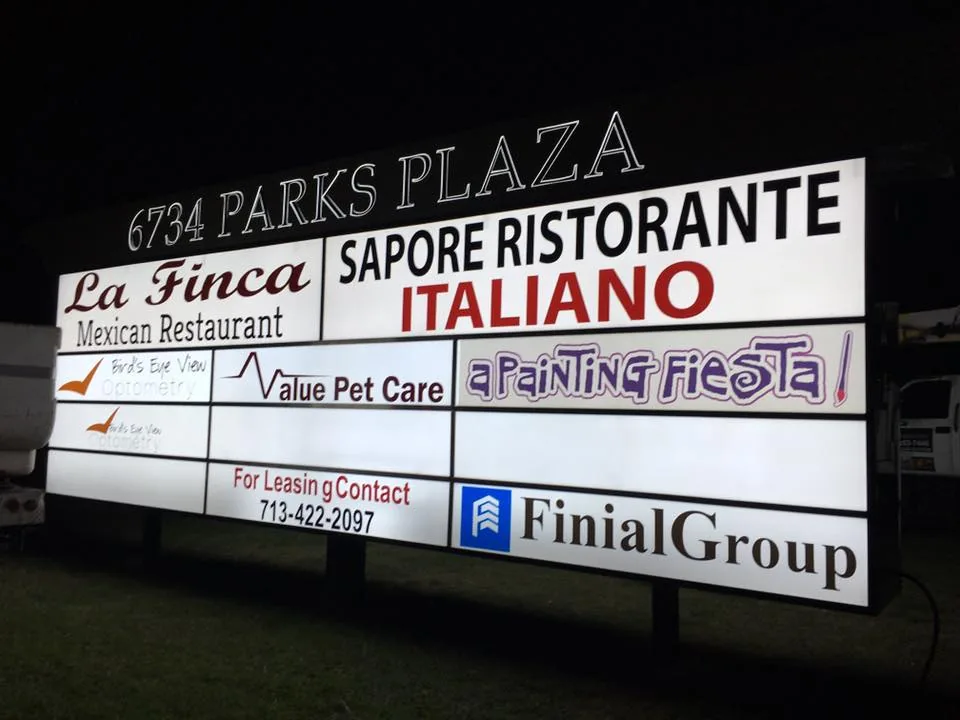
On an illuminated shared sign, the face is only one part of the assembly. New graphics can change how the panel appears when lit, and existing internal components may need attention. Uneven illumination or a dark section should be reviewed rather than covered with new artwork and treated as resolved. Access to the sign also needs to be planned, especially where work is carried out above vehicle or pedestrian areas.
Tell us whether the brief includes a face replacement, investigation of a lighting issue, or both. Those tasks can require different work and should be reflected in the scope. Our sign repairs service can support a separate maintenance discussion where appropriate. Do not arrange for unqualified staff to open or modify electrical components. For the new panel, review daytime and illuminated appearance expectations before approval. The artwork, material, and existing assembly need to work together for the updated tenant information to look coherent.
Coordinate transitions with leasing and operations
A tenant move creates several dates: lease commencement, fit-out completion, opening, old branding removal, and installation of the new signs. They do not always fall together. Management should identify which date matters for each sign and whether a shared directory needs updating before the new unit frontage is ready. A realistic sequence avoids directing visitors toward a business that is not yet open or leaving the previous occupant listed long after departure.
An occupied center also needs an installation plan around trading hours, parking, and site access. Discuss whether loading areas, lift access, or parts of the driveway will be affected. Where several panels are being updated, a coordinated visit may be more practical than separate unplanned changes, subject to project conditions. Share the required approvals and target dates early. Timing should be confirmed against the agreed scope and dependencies rather than assumed from the size of the printed panel alone.
Ask for a quote that identifies the whole update
A useful tenant signage quote distinguishes the graphic work from other necessary tasks. Panel size, material, print or lettering method, quantity, removal, installation, and access can all affect the price. Work on lighting or structural components should be identified separately if it is included. For an existing sign, photographs and approximate measurements help begin the discussion, but a site review may be needed before the final specification is confirmed.
If you manage several properties, say whether you need one replacement or a repeatable standard. A consistent brief can make later orders easier to coordinate, even when the sites have different sign structures. Ask which information is required for each update and who retains the artwork. Avoid comparing a supply-only panel price with a proposal that covers removal and installation at height. Clearly defined scope gives both the property manager and tenant a better basis for deciding what is authorized and how the cost will be allocated.
Keep your property information current and coordinated
Send your Houston property address, photographs of the shared signs and directories, and a current tenant list. Mark the entries that need changing and identify any lighting or physical damage that should be reviewed separately. Include the property's sign criteria and the approved tenant logos. If you are planning a completely new system, share a site plan and explain the entrances, buildings, and visitor routes that the signs need to connect.
Royal Signs & Awnings can help you develop a tenant signage brief that respects both the property's appearance and the occupants' need to be found. Request a property signage consultation or call (346) 644-6749 to discuss a panel update, directory replacement, or coordinated package. The goal is not simply to add another company name. It is to keep a shared property understandable as businesses move in, expand, rebrand, and move on, with a system that management can continue to use.
Let’s talk about your sign.
Share your location, artwork and project goals with our Houston team.
Request a ConsultationPROJECT QUESTIONS
Frequently asked questions
Can one tenant panel be replaced without replacing the entire sign?
It may be possible when the existing structure and retaining arrangement are suitable. The opening, panel specification, and condition should be checked first.
Who should approve tenant sign artwork?
Agree the approval process with property management. The tenant should verify its identity and wording, while management confirms the format and property requirements.
Do tenant panel replacements include lighting repairs?
Not automatically. A face replacement and electrical or maintenance work should be identified separately in the written scope.
Can directories be designed for frequent updates?
Some formats allow replacement inserts or modular parts. Discuss occupancy changes before selecting the construction and keep a record of the approved specifications.
What information do you need for a tenant sign project?
Share the property address, photographs, current tenant list, required changes, approved logos, and sign criteria. Include a site plan for a new property-wide package.